Health & Medicine
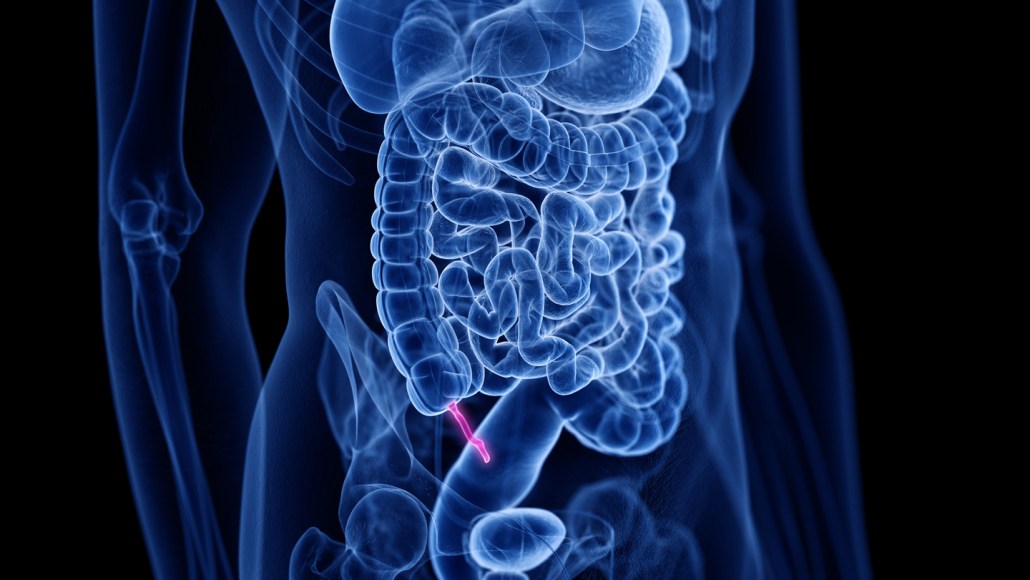
Antibiotics can treat appendicitis for many patients, no surgery needed
After 10 years, just over half the people in a trial of antibiotics for appendicitis have not needed an appendectomy.
We summarize the week's scientific breakthroughs every Thursday.
A long-term observational study found a link between the amount of tea and caffeinated coffee people drank and the risk of dementia.
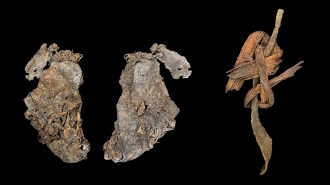
Two pieces of elk hide connected by a twisted-fiber cord are the earliest evidence of sewing. But what they were used for is still a mystery.
Study showcases how modern-day foragers stick together when seeking food. Such social forces could help explain the emergence of complex thinking.
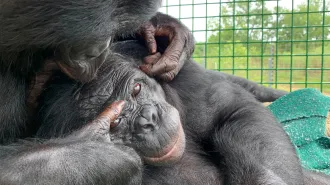
Apes, like humans, are capable of pretend play, challenging long-held views about how animals think, a new study suggests.
A mathematical model simulated patient outcomes when given caregiver support or an expensive Alzheimer’s drug to determine cost and health benefits.
In mice, the oral bacteria F. nucleatum can travel to mammary tissue via the bloodstream, where it can damage healthy cells.
A new study finds that humans and AI spot different kinds of deepfakes — hinting at the need to team up to fight them.
Procrastination in young adulthood is not set in stone, though change is difficult, a long-term study shows.
A modeling study of Norway, which has high HPV vaccination coverage and uniform cervical cancer screening, suggests fewer screens could be needed.